Grid-tied, no battery
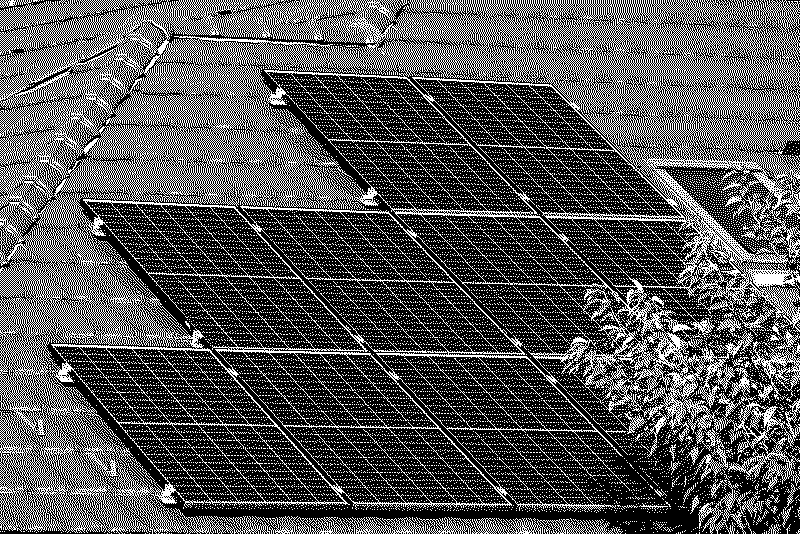
The simplest and usually the quickest payback. Panels cover daytime use and the grid covers the night. It works best if you shift loads such as washing, dishwashers, water heating and cooling into the middle of the day.
Sunward is about running a home on sunshine, rain and good design wherever the sun is generous, from southern Europe to Mexico and South Africa. We start with measured figures, compare real cities, show our working, and say plainly where the sun stops being enough. No hype, no miracle kits, just the maths of energy independence.
Output figures: European Commission PVGIS model, 1 kWp at optimal tilt facing the equator, 14% system losses. Cities: Lisbon, Seville, Athens, Cape Town, Mérida and Oaxaca.
Sunshine hours make good postcards, but the number that sizes a system is energy per installed kilowatt of panels (kWp). We ran the European Commission's PVGIS model for an unshaded array at its best tilt in six sunny cities. The yearly totals are close: about 1,580 kWh per kWp in Mérida, 1,592 in Lisbon, 1,611 in Athens, 1,657 in Seville, 1,687 in Cape Town and 1,723 in Oaxaca. Berlin, for comparison, manages about 1,062.
The yearly total hides the part that matters for independence: the worst month. In Lisbon and Athens, December delivers a little over half of what July or August does. Cape Town mirrors this in the southern hemisphere, where panels face north and June is the low point, at about half of January. Closer to the tropics the swing is much smaller: in Mérida the weakest month still gives about 80% of the best. Oaxaca adds a twist, because its weakest month is September, in the rainy season, not midwinter.
Two practical rules follow. Size an off-grid array for your worst month, and check which month that is rather than assuming it is December. And treat the surplus in the best months as a resource to plan for, whether that is pumping water at noon, heating water, running cooling, or accepting that some sunshine goes unused.
Enter how much electricity you use in a day, pick the example city closest to your climate, and choose a mode. The estimator uses the PVGIS figures above, so it assumes an unshaded array facing the equator at a good tilt. It is a rough starting point for a conversation with an installer, not a design.
Most people asking about off-grid living in a sunny country really want one of three things: a smaller bill, resilience during power cuts, or no grid connection at all. They lead to very different systems, and the cheapest route to the first is rarely the right route to the third.
The simplest and usually the quickest payback. Panels cover daytime use and the grid covers the night. It works best if you shift loads such as washing, dishwashers, water heating and cooling into the middle of the day.
A battery moves midday surplus into the evening. In many countries exported power earns far less than grid power costs, so storing it can make sense. Check that the inverter can keep chosen circuits running in a power cut: many cannot without an extra switch.
Sized for the worst week of the worst month, with a bigger array, more storage and usually a backup source. Lithium iron phosphate (LFP) batteries are now the common choice for homes. Read warranty terms on both years and total energy throughput, and keep the battery shaded and ventilated: in a hot climate, heat is what shortens its life.
The physics of solar is universal; the paperwork is not, and in some countries it changes from one city to the next. Most arrangements for surplus power fall into one of four broad models. Know which applies to you before you decide how big to build.
| Model | How it works, with examples |
|---|---|
| no export | The system never feeds the grid. Often the lightest paperwork: Portugal, for example, exempts non-exporting systems up to 800 W from prior control. |
| compensation | Exported energy is credited against your bill. Spain's simplified compensation covers installations up to 100 kW, capped at the cost of the energy you consumed. Mexico's regulator approved net metering for small distributed systems in 2017. |
| sale of surplus | You sign a contract with a buyer or aggregator, usually at a price linked to the wholesale market. This is Portugal's model: there is no net metering in the classic sense. |
| local tariff | The local utility pays a set rate per kWh exported. In South Africa this is decided by each municipality: Cape Town pays a feed-in tariff, while some other metros offer net metering. |
Thresholds usually depend on installed power and on whether you export. Ask who must be notified, whether an export meter is needed, and what an exported kWh is worth. In Portugal, systems from 800 W to 30 kW need a prior communication to the energy directorate, DGEG. In Mexico, grid connection runs through an interconnection contract with the national utility, CFE.
Under almost every model, a kWh you use yourself is worth more than one you export. Size for your own use and treat export income as a bonus.
Tax treatment of solar changes often. Germany has applied a zero VAT rate to home solar since 2023, while Portugal's reduced 6% rate ended for work invoiced after 30 June 2025, returning it to the standard 23%. Check the rate, any grants and any import duties on the day you sign.
Water is the half of off-grid living that solar blogs skip. The arithmetic is simple: 1 mm of rain on 1 m² of roof is 1 litre. Lisbon gets roughly 700 to 800 mm a year, and many sunny places get less. A 100 m² roof catching 80% of 600 mm yields about 48,000 litres a year.
The catch is timing. In Mediterranean climates such as Lisbon, Seville, Athens and Cape Town, most rain falls in the cooler months and summer is long and dry. In Mérida and Oaxaca the pattern flips: a summer rainy season, then a dry winter and spring. Either way, rainwater harvesting in sunny places is a storage problem more than a collection problem: tank size decides how far into the dry season you get.
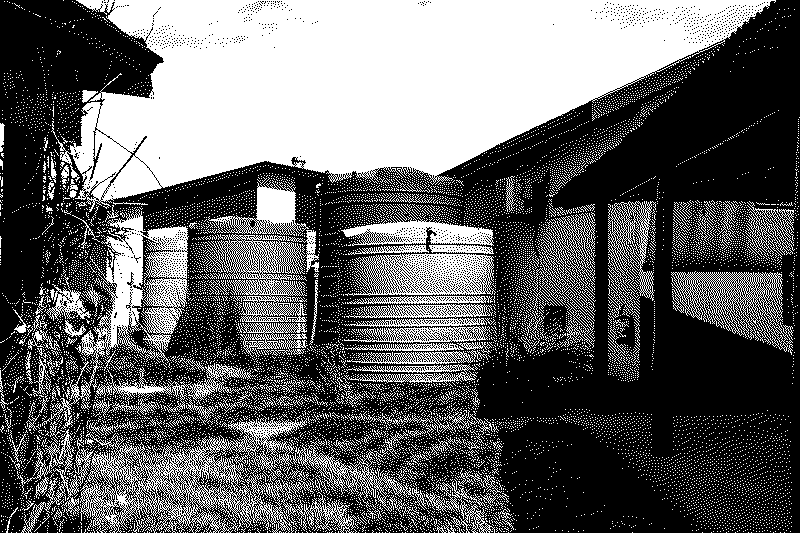
Use a first-flush diverter, keep tanks dark and cool, and decide early whether the water is for garden and toilets only or treated for drinking. Drinking use needs proper filtration, disinfection and regular testing.
Greywater can water trees and ornamental beds. Use plant-friendly soaps, send it to the soil quickly rather than storing it, and keep it away from vegetables you eat raw.
They save the most water of anything here and work well when managed properly. Acceptance varies by country and often by municipality, so ask the local authority (the câmara municipal in Portugal, the ayuntamiento in Spain, the municipio in Mexico) what it will approve before you build, and get the answer in writing.
Sunny does not mean comfortable indoors. Many older houses around the Mediterranean have thick stone walls, single glazing and no central heating, and feel colder in January than a well-insulated house in northern Europe. In hotter places the problem flips to cooling. Either way, the cheapest kilowatt-hour is the one you never need, so insulation, shading, draught-proofing, good windows and, where the climate suits it, cross-ventilation come first.
After that, a heat pump (a reversible air conditioner is one) is usually the most efficient electric option, delivering several units of heat or cooling for each unit of electricity in a mild climate. Cooling is the easy case for solar: demand peaks on hot, bright afternoons, when the panels produce most. Heating is the hard one. Demand peaks on the dullest days, exactly when output is lowest, so many off-grid households with cool winters pair a modest heat pump with a wood stove, ideally one with a back boiler or thermal mass that stores heat. Burn only well-seasoned wood: wet logs waste heat and soot the flue.
Prices differ by country and move quickly, so here is the shape of the bill rather than a figure that will soon be wrong. Get at least three itemised quotes and compare them line by line against this list.
Panels, mounting, inverter or charger, battery bank, cabling, protection and installation. For off-grid homes the battery is usually the largest single item, and it grows fast with every extra day of autonomy. Import duties and local availability can move the total a long way from one country to the next.
Covering the final few days of the worst month costs far more than the first ninety percent of the year. A small generator or a wood stove is often cheaper than doubling the battery.
Panels last decades, but inverters and batteries have shorter lives, and heat shortens them further. Budget for replacing them at least once over the life of the house, plus pumps, filters and tank maintenance.
Off-grid homes run best when people watch the weather and shift loads. That is a real cost for some households and a pleasure for others. Be honest about which you are.
The European Commission's PVGIS model puts a well-placed 1 kWp array at about 1,580 to 1,720 kWh a year in Lisbon, Seville, Athens, Cape Town, Mérida and Oaxaca, after typical system losses. That is roughly 4.3 to 4.7 kWh a day on average, against about 1,060 kWh a year in Berlin. Shading and orientation can cut this considerably.
It depends on the country, the system size and whether you export. Systems that never feed the grid usually face the lightest rules: Portugal, for example, exempts non-exporting systems up to 800 W. In South Africa each municipality runs its own process. Planning and heritage rules can add steps, so check with your installer and the local council.
Usually, on different terms. Spain credits exports against the bill for installations up to 100 kW. Portugal lets you sell surplus under contract at a wholesale-linked price. Cape Town sets its own feed-in tariff. Almost everywhere, a kWh you use yourself is worth more than one you export.
Yes, but the worst month is the design problem. In Lisbon, Athens and Cape Town it gives about half the output of the best month; near the tropics, as in Mérida, the gap is much smaller. Most off-grid homes combine a generously sized array, enough battery for a day or two, low-energy appliances, and a backup such as a generator or wood heating.
It depends on the country and often on the municipality, because rules on on-site sanitation are usually applied locally. Before you build, ask the local authority what it will approve for your property, and get the answer in writing.
It varies by country and changes often. Germany has applied a zero VAT rate to home solar since 2023, while Portugal returned to its standard 23% rate for work invoiced after 30 June 2025. Check the current rate, grants and import duties before you sign.
How this guide is researched and kept up to date
Rules and prices change, and they differ between countries and often between municipalities. Everything here is general information, not legal, tax or engineering advice. Check current regulations with your national energy regulator, your electricity utility and your local council, and have any installation designed and signed off by a qualified professional.